Enter through the narrow gate. For wide is the gate and broad is the road that leads to destruction, and many enter through it. But small is the gate and narrow the road that leads to life, and only a few find it.There is more here than meets the first glance. Long before Jesus' time choosing the right road/path was a well worn scriptural metaphor, e.g. Psalm 23:3, 86:11, Prov 2:20, to name but a few. Now I think this whole section of the sermon, 7:13-27 echoes strongly Deuteronomy 30:11-20 where Moses puts "the decision" before Israel, but there are a further two passages from the prophets which I think should be seen a background to Jesus' words and applied when understanding the extent of Jesus' claims about his teaching and himself.
Showing posts with label Isaiah. Show all posts
Showing posts with label Isaiah. Show all posts
Tuesday, March 6, 2012
OT Background to the Narrow Road
I was preaching on Sunday on the narrow road bit of the sermon on the mount, Matt 7:13-14,

Sunday, February 26, 2012
Theology of Hospitality
I'm preaching on Acts 16:11-15 this morning, and although I think the main point of the passage is Paul's multiple boundary crossing acceptance of Lydia, it's got me thinking too about hospitality - a notable subtheme of Luke/Acts. here is a quick sketch of a biblical theology of hospitality, I'm sure more could be added, please do so in the comments!
Creation - In the biblical account of creation God is portrayed as the divine host making a home for all earth's creatures and providing them with food.
Israel - In the desert God hosts his people on their pilgrimage, providing water, bread and meat. At the same time he teaches them to host him, by providing a tabernacle and sacrifices they play host to God.
Incarnation - Jesus' first act is to be a guest of someone else, and throughout his ministry as an itinerant preacher he is dependent on the hospitality of others, his gratuitous "guesting" brings him criticism (friend of sinners) but was a central part of his message. But in the feeding of the 5,000 and 4,000, in the miraculous provision of fish or even a room to share passover Jesus reveals himself as host, echoing both Gods hosting in creation and in the exodus. In giving himself upon the cross Jesus offers us his own body (John 6, 1 Cor 11) and in his triumph over death prepares a home for all God's people to live as God's guests (John 14, Rev 21).
Eschatology - Isaiah 25 promises a divinely provided feast for all nations, while Matt 22 uses the image of a wedding feast with God as host to describe the kingdom.
Ecclesiology - So as God's people a key spiritual discipline is to image, enact and embody both God's hospitality and God's condescension as guest, in sharing bread and wine, in opening our homes to strangers, in being willingly dependent on the hospitality of others (esp in mission), in giving thanks for the gifts of creation and in sharing them with an open hand.
Creation - In the biblical account of creation God is portrayed as the divine host making a home for all earth's creatures and providing them with food.
Israel - In the desert God hosts his people on their pilgrimage, providing water, bread and meat. At the same time he teaches them to host him, by providing a tabernacle and sacrifices they play host to God.
Incarnation - Jesus' first act is to be a guest of someone else, and throughout his ministry as an itinerant preacher he is dependent on the hospitality of others, his gratuitous "guesting" brings him criticism (friend of sinners) but was a central part of his message. But in the feeding of the 5,000 and 4,000, in the miraculous provision of fish or even a room to share passover Jesus reveals himself as host, echoing both Gods hosting in creation and in the exodus. In giving himself upon the cross Jesus offers us his own body (John 6, 1 Cor 11) and in his triumph over death prepares a home for all God's people to live as God's guests (John 14, Rev 21).
Eschatology - Isaiah 25 promises a divinely provided feast for all nations, while Matt 22 uses the image of a wedding feast with God as host to describe the kingdom.
Ecclesiology - So as God's people a key spiritual discipline is to image, enact and embody both God's hospitality and God's condescension as guest, in sharing bread and wine, in opening our homes to strangers, in being willingly dependent on the hospitality of others (esp in mission), in giving thanks for the gifts of creation and in sharing them with an open hand.
6 On this mountain the LORD Almighty will prepare
a feast of rich food for all peoples,
a banquet of aged wine—
the best of meats and the finest of wines.
7 On this mountain he will destroy
the shroud that enfolds all peoples,
the sheet that covers all nations;
8 he will swallow up death forever.
The Sovereign LORD will wipe away the tears
from all faces;
he will remove the disgrace of his people
from all the earth.
The LORD has spoken. (Isaiah 25)
Thursday, May 26, 2011
Sexy Church?
Ok I wouldn't normally click on any fb video with the word "sexy" in the title but this seemed like a genuinely interesting social experiment. It was eye-opening but not entirely surprising.
Now I have not the remotest hope that anything I could do or say could change the fact that this is how our society works, and as a guy with two young daughters already obsessed with disney princesses I worry about how these social realities will affect and form my girls and their self understanding . . . whether they grow up to be "hot" or not. My question is how this social reality has affected the church? And I don't think it is just girls either, look around you at the people who are celebrated and encouraged at your fellowship, are many ugly, are many poorly dressed, or does God seem to only call the hip and good looking?
The truth is that those who do not fit the outside world's criteria of attractiveness will not be found to fit the church's implicit criteria of what will work and who God can use. I think of 1 Cor 1:28 and I think of Isaiah 53:1-3 and I have to wonder if good looking churches have any power to reach our broken world at all, or if they are merely hostage to the same lies.
What do you think?
Documentary : Sexy Girls Have It Easy from Bright Hand Pictures on Vimeo.
Now I have not the remotest hope that anything I could do or say could change the fact that this is how our society works, and as a guy with two young daughters already obsessed with disney princesses I worry about how these social realities will affect and form my girls and their self understanding . . . whether they grow up to be "hot" or not. My question is how this social reality has affected the church? And I don't think it is just girls either, look around you at the people who are celebrated and encouraged at your fellowship, are many ugly, are many poorly dressed, or does God seem to only call the hip and good looking?
The truth is that those who do not fit the outside world's criteria of attractiveness will not be found to fit the church's implicit criteria of what will work and who God can use. I think of 1 Cor 1:28 and I think of Isaiah 53:1-3 and I have to wonder if good looking churches have any power to reach our broken world at all, or if they are merely hostage to the same lies.
What do you think?
Saturday, February 26, 2011
Christchurch Earthquake Liturgy
I have wanted to blog meaningfully about the earthquake, but found myself inadequate, preparing for this Sunday's service has been hard enough, but unlike a blog post I have no choice about doing that. Three posts about the earthquake that I believe are meaningful and am not ashamed to be leaning on in my own preparation for tomorrow:
Friday, October 29, 2010

Thursday, August 26, 2010

Thursday, June 3, 2010
#300! A best of blog . . .
This is my 300th post on Xenos. Too celebrate this milestone I have collected one of the better posts from each lot of 50. It's interesting to see how the blog has changed over time. It started of when I thought I knew a lot, having just finished my undergrad studies. Now I know a lot less, coming to the end of my research degree. :-) Thanks to everyone who has contributed, interacted, and read it. As I come to the end of my MTh degree it will be interesting to see how the blog develops, whether it gets more attention (due to no looming deadlines) or less (due to no dealines causing procrastination reflex). Eitherway, I'm looking forward to the next 300 and hope you'll join me on the journey. :-)
A reflection on 1 Samuel from Dec 2008
I used to do more of these kind of devotional readings of the OT. Will have to get back into the habit.
As sermon about the ethiopian eunuch from March 2009
This sermon works best delivered whilst holding two rocks suitable for crushing testicles and grinding them together whenever you talk about the eunuch's experience (but not on any actual testicles).
A critique of Charles Stanley's preaching from June 2009
This was a cheap shot, an easy target, but gets heaps of hits, and got me called "a muslim." Whoever wrote that was probably misguided enought to think it was an insult. I would like to do some more critiques of TV preachers, but really life is too short to sit through that drivel. Maybe one day...
A reflection on why bad music is good from Sept 2009
One of the regretably few anecdotes I have about my missionary/pastor grandfather inspired these thoughts about music.
Some biblical contradictions explored in Nov 2009
This was the first post linked to by one of the mega-blogs, whch saw a massive spike in hits to the blog . . . for that post only. Then I learned, getting people to come to your blog once was no guarantee that they would return.
A first stab at a theology of scripture in Dec 2009
A subject dear to my heart and something I still feel contemporary Christians are all at sea about. This post is hardly a life boat, but it is perhaps a first lesson in doggy paddle?
An coversation about vengeance and the gospel in March 2010
Sometimes my dander just gets up and I have to stick my oar in. This was one of those times.It doesn't mean I think i'm right, it just means i'm agitated.
Enjoy, and let me know what you think!
A reflection on 1 Samuel from Dec 2008
I used to do more of these kind of devotional readings of the OT. Will have to get back into the habit.
As sermon about the ethiopian eunuch from March 2009
This sermon works best delivered whilst holding two rocks suitable for crushing testicles and grinding them together whenever you talk about the eunuch's experience (but not on any actual testicles).
A critique of Charles Stanley's preaching from June 2009
This was a cheap shot, an easy target, but gets heaps of hits, and got me called "a muslim." Whoever wrote that was probably misguided enought to think it was an insult. I would like to do some more critiques of TV preachers, but really life is too short to sit through that drivel. Maybe one day...
A reflection on why bad music is good from Sept 2009
One of the regretably few anecdotes I have about my missionary/pastor grandfather inspired these thoughts about music.
Some biblical contradictions explored in Nov 2009
This was the first post linked to by one of the mega-blogs, whch saw a massive spike in hits to the blog . . . for that post only. Then I learned, getting people to come to your blog once was no guarantee that they would return.
A first stab at a theology of scripture in Dec 2009
A subject dear to my heart and something I still feel contemporary Christians are all at sea about. This post is hardly a life boat, but it is perhaps a first lesson in doggy paddle?
An coversation about vengeance and the gospel in March 2010
Sometimes my dander just gets up and I have to stick my oar in. This was one of those times.It doesn't mean I think i'm right, it just means i'm agitated.
Enjoy, and let me know what you think!
Friday, May 14, 2010
Perseverance and Apostasy in 1 Cor 10
We may notice in this context that Paul’s language moves from ’all’ (10.1-4) and ’some’ (10.5-10) to third person singulars in 10.12. . . [I]t is precisely the individual who is in danger of falling away. Israel as an elect people (’all’) were not destroyed, only ’some’. As such, Paul affirms the election and final perseverance of the people of God as a collective whole similar to the wilderness and prophetic traditions that maintain that God preserves a remnant of God’s people (e.g., Num. 14.23-24, 29-32; Deut. 4.25-31; Isa. 1.9). If Paul’s theology on this issue is consistent throughout his letters, then it is plausible to suggest that individual Christians could take comfort in final perseverance only as they remain identified as members of God’s elect community. If such is the case, then there is really no contradiction between final perseverance and genuine apostasy. The tension is between individuals and the collective community. Regarding final perseverance, Paul may not believe that everything that is true of the whole community (or body of Christ) is necessarily true of every genuine member of that community-genuine members could fall away.
B.J. Oropeza
Paul's Message To the Corinthians in a State of Eschatological Liminality"
Journal for the Study of the New Testament 2000; 22; 69-86
Sunday, March 14, 2010
NT Hermeneutics: A Matter of Faith
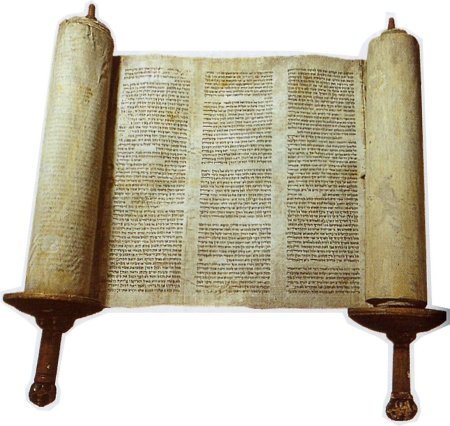
To return to Luke 4 and Isaiah 61. If Jesus was just selectively choosing a passage of scripture that happened to fit what he wanted to say at that point and then missing out the bits that didn't fit with his message then he is both an idiot and a deceiver. He is an idiot because his audience would have been familiar with the rest of the text around Is 61:1-2a, an especially cherished messianic text, as a result merely quoting the first bit (if that is all he did, which is by no means certain) would still have evoked in his readers all the consequent bits. He is a deceiver because he is claiming to fulfill this text. He is not saying "oh look, here is a nice poem that happens to fit the mood i'm in right now," he claims to be the texts fulfillment: the anointed one that Isaiah was talking about. That is, he claims the meaning of the text is himself. If only bits of Isaiah actually apply then he cannot be the meaning of the text, for bits of the text cannot be selected or rejected without the text ceasing to be the text.
This is what really bugs me. For the Christian, if you do not think Jesus and Paul were being honest in their use of scripture, if you think they were misusing it or applying it dishonestly or incorrectly, then they must be wrong about the way that they were in continuity and fulfillment of it in their respective missions, which means you are wrong to follow them. If the sceptics wish to suggest that Jesus and Paul were just exegetical incompetents and none of their followers noticed, let them. But for the believer, doing the hard work of understanding exactly what they were doing when they cited scripture and understanding through their eyes what the OT means is essential. Without it Jesus and Paul are fraudsters, it is simply a matter of faith.
Thursday, March 11, 2010
But Vengeance IS Good News: A reply to David Ker
David Ker is thinking about skipping the bits of the Bible where vengeance is mentioned. Given his African context where Christians sometimes seem a bit too keen to hand out divine retribution themselves this is totally understandable. Neither would such an action be without precedent, Ulfilas the 4th century bishop refused to translate parts of the OT into the language of the Goths for fear they might get the wrong end of the stick.
Perhaps more to the point is that anyone who preaches or teaches has to be selective in the texts they use (as there are only so many hours in a life) and so they will naturally use the texts which seem to them the most useful, enlightening, and life giving in their situations. But I think Ker has a few things backwards, he writes,
Ker uses as his own proof text the Nazareth manifesto of Luke 4:16-19. The thing is in Luke it doesn't actually say what Jesus did or didn't read out, it only points us to the place in the scroll that he read from. This is not evidence of Jesus selectively quoting scripture. Notwithstanding, Ker suggests two reasons why Jesus missed out the vengeance bit of Isaiah 61:1-2.
I would suggest, and humbly because I do not share David's context, that perhaps it is those very vengeance texts that need to be taught and preached so that those Christians who are wronged can rest from their own desire for revenge and trust in God's ultimate justice. For those who are oppressed and victimised God's vengeance is good news, if you skip that bit they may feel an even greater need to take matters into their own hands.
Pax vobiscum.
Let me know what you think. :-)
Perhaps more to the point is that anyone who preaches or teaches has to be selective in the texts they use (as there are only so many hours in a life) and so they will naturally use the texts which seem to them the most useful, enlightening, and life giving in their situations. But I think Ker has a few things backwards, he writes,
Two weeks ago in The Bible is not the Gospel I made the controversial claim that the Gospel is more important than the Bible. We are called to preach the Gospel not preach the Bible.Which is true, but not not helpful. It is a bit like saying a person is not their body, we are called to love peole not their bodies, so I am free to ignore certain bodily needs of others because they are only needs of the body not the person. The Bible is not the Gospel, but the Bible contains the Gospel in such a way as to make it impossible to distill the Gospel from the Bible and do without the Bible. Cut holes in the Bible and you are cutting holes in the Gospel, even though the Bible is not the Gospel. Ker continues,
And the overwhelming witness of the New Testament is that Jesus and all preachers after him used the Old Testament very selectively as a launching point for a message about the Kingdom and its King.This is one of those ideas that seems to have wide circulation and is used to justify all sorts of "violence" against the OT. But it just isn't true. No Jesus and Paul and the other NT writers did not systematically make sure they quoted from every genre of scripture but everything they taught presupposed the OT, in its entirety. The gospel of the NT can only make sense and be understood as its stands on the foundation of the OT. Not only so but when Jesus and Paul and the others use the OT they do not just proof-text widly but have a profound intertextual hermeneutic. That this is so is slowly being demonstrated by the new(ish) wave of scholarly interest in the NT use of the OT.
Ker uses as his own proof text the Nazareth manifesto of Luke 4:16-19. The thing is in Luke it doesn't actually say what Jesus did or didn't read out, it only points us to the place in the scroll that he read from. This is not evidence of Jesus selectively quoting scripture. Notwithstanding, Ker suggests two reasons why Jesus missed out the vengeance bit of Isaiah 61:1-2.
First, pragmatically, Jesus was using this passage to kick off his ministry which was to be about God’s favor. Second, and related, is the fact that under the new covenant that God was making with all the peoples of the world, vengeance was set aside, or you could say transferred to Christ who bore all the vengeance of God’s wrath on the cross in our place.We need to ask what God's favour means to a people living under the oppresive goverment of a foreign power. It means that their enemies get dealt to. God's favour is not a "nice" thing and his vengeance "nasty." In Isaiah 61 the direct result of God's vengeance is the comforting of those who are mourning and grieving. Why are they comforted because God's vengeance is good news to those who have been oppressed, ruined and devastated. Vengeance does not mean revenge, it means justice. More specifically it means God's justice. Revenge is what happens when we take it upon ourselves to deal with those who have oppressed us, to punish them. It always goes wrong because we are not capable of true justice. God is.
I would suggest, and humbly because I do not share David's context, that perhaps it is those very vengeance texts that need to be taught and preached so that those Christians who are wronged can rest from their own desire for revenge and trust in God's ultimate justice. For those who are oppressed and victimised God's vengeance is good news, if you skip that bit they may feel an even greater need to take matters into their own hands.
Pax vobiscum.
Let me know what you think. :-)
Friday, February 12, 2010
Grasshopper Theology 1

God has a wonderful plan for your life, so if your life doesn't turn out to be wonderful, that is if no one would want to write a book about your life, then you must have done something wrong with it. I'll be honest, I often feel burdened that I am supposed to do something great, achieve something mighty, make a difference to the world, leave my mark, live a life worthy of one of those really inspiring Christian biographies that line the shelves of the Christian book stores. But does that desire come from my devotion to God and my desire to serve Christ, or from my own ego that thinks I'm so special and important that my life needs to really count for something?
Grasshopper Theology is the antidote to thinking that you are someone special who God needs to do something really great to help God save the world. A certain church near me delights in teaching its young people that they are royalty, princes and princesses, because they are Christians they are God's children and so can expect the success and priviledge that comes from being the children of the King of the Universe. It's a nice idea. But Grasshopper Theology takes a different tack, frankly when God comes to town, it is better not to be caught being the prince . . .
Do you not know?
Have you not heard?
Has it not been told you from the beginning?
Have you not understood since the earth was founded?
He sits enthroned above the circle of the earth,
and its people are like grasshoppers.
He stretches out the heavens like a canopy,
and spreads them out like a tent to live in.
He brings princes to naught
and reduces the rulers of this world to nothing.
Wednesday, December 16, 2009
Yet another instance of 2 Chron 7:14 abuse!
I get so tired of hearing 2 Chron 7:14 quoted by western Christians in regard to their own nations. In its context it is quite clearly about ancient Israel and the unique relationship it would enjoy as the site of God's temple. Today the temple site has a mosque built on it and Garth George seems to think that it is actually about New Zealand. So in its literal sense it no longer applies. Quite what modern Christians are supposed to take from it is another matter, but it certainly isn't a promise of national social or religious renewal if enough people pray for it. Don't even get me started on his use of Isaiah 6:9-10, which is apparently a rebuke for a failure to take interest in Maori/Pakeha tensions!
Tuesday, December 8, 2009
Beyond Inerrancy: Towards a Meaningful Theology of Scripture
So if Inerrancy is meaningless (see previous post) how can we express a "high view" of scripture without it? Well I would suggest that the two things wrong with inerrancy need to be two things right with any other proposal, namely that the Bible we have now must be shown to be the word of God and that word must be guarded against the claims of any "authoritative interpreters."
The place I would start is Isaiah 55. This text affirms a number of things forcefully and beautifully.
In vs1-3, God calls us to come to him and listen to him for our salvation, but in vs6-7 we are told to call on God and seek him. Thus the word of God is shown to be dialogical. It both represents God's word to us and calls us into conversation with God and searching for God through that word. Then in vs8-10 the nature of God word to us is expounded. It is both alien and beyond us (vs8-9) but also purposeful, dynamic, and effective (v10).
We could then heuristically apply this as framework for our own understanding of scripture. This might have the following results:
1. Because God's word is a dynamic communication it is not stored in static historical documents no longer extant, but comes to us through the various traditions of scripture including the Septuagint, the Masoretic Text, the KJV, the Luther Bible and the Paipera Tapu (to name but a few). The changing and varied nature of these traditions are evidence of God's dynamic communication with the world, not the second best option to having the "original manuscripts."
2. Because God's word is beyond human thought no human is permitted to set themselves above the text to give an authoritative interpretation. Instead we are all called into humble searching dialogue with the text, confident that God will achieve what he wills through it (perhaps provided we "give ear" and "hear" (v3) rather than come to the text with our own assumptions) but conscious that any ultimate grasp of it is beyond our reach.
Let me know what you think :-)
P.S. This approach might also spare us from needing to talk about the "preservation of scripture" (which makes it sound like a fossil) and the "perspecuity of scripture" (which is another strong tower for those who use the Bible to beat others over the head).
The place I would start is Isaiah 55. This text affirms a number of things forcefully and beautifully.
In vs1-3, God calls us to come to him and listen to him for our salvation, but in vs6-7 we are told to call on God and seek him. Thus the word of God is shown to be dialogical. It both represents God's word to us and calls us into conversation with God and searching for God through that word. Then in vs8-10 the nature of God word to us is expounded. It is both alien and beyond us (vs8-9) but also purposeful, dynamic, and effective (v10).
We could then heuristically apply this as framework for our own understanding of scripture. This might have the following results:
1. Because God's word is a dynamic communication it is not stored in static historical documents no longer extant, but comes to us through the various traditions of scripture including the Septuagint, the Masoretic Text, the KJV, the Luther Bible and the Paipera Tapu (to name but a few). The changing and varied nature of these traditions are evidence of God's dynamic communication with the world, not the second best option to having the "original manuscripts."
2. Because God's word is beyond human thought no human is permitted to set themselves above the text to give an authoritative interpretation. Instead we are all called into humble searching dialogue with the text, confident that God will achieve what he wills through it (perhaps provided we "give ear" and "hear" (v3) rather than come to the text with our own assumptions) but conscious that any ultimate grasp of it is beyond our reach.
Let me know what you think :-)
P.S. This approach might also spare us from needing to talk about the "preservation of scripture" (which makes it sound like a fossil) and the "perspecuity of scripture" (which is another strong tower for those who use the Bible to beat others over the head).
Friday, December 5, 2008
Potters, Parents and Idolatry: Isaiah 45:9-11
Woe to you who strive with your maker,The image of a pot speaking to the potter as he turns it on the wheel is hilarious. Apart from the the misshapen clay actually talking in the first place, there is also the audacity of the clay to be saying 'excuse me, but you've missed a bit!' A kindly potter might say 'I'm not quite finished yet and please hold still while I work.' Even worse is the picture of a child challenging their parents over the event of their conception or birth. My two year old daughter frequently questions my judgement when it comes to biscuit distribution, sun block, or bed time. But to question your parents at the point at which you enter existence or begin to breathe seems absurd in the extreme. In its context in Isaiah this passage is a rebuke to the people of God who are unwillingly to accept God's plan to rescue them with Cyrus, a Persian (and very pagan) king. The idea that God would use an outsider does not fit in with their theology. The irony is that their complaint against Cyrus is presumably that he is a pagan idolator and yet, by insisting that God is unable or unwilling to do something that God is in fact doing, they themselves have committed idolatry. When the clay questions the potter, or the baby her parents, they place themselves above the ones to whom they owe their existence and identity. The ones who are engaged in the very act of forming them. The people of God were not just refusing to let God shape them, they were telling God how to be God.
earthen vessels with the potter!
Does the clay say to the one who fashions it, 'what are you making'? or 'your work has no handles'?
Woe to anyone who says to their father, 'what are you begetting?' or to their mother, 'with what are you in labour?'
Thus says the Lord, the holy one of Israel and its maker:
Will you question me about my children, or command me concerning the work of my hands?
(Isaiah 45:9-11)
This is why this blog is not about expanding 'my theology' or 'a theology'. Any theology that looks like a system or complete method for understanding/knowing God is idolatry. It is making God with our own hands/minds instead of letting God be God. That's why I prefer to talk about 'doing theology'. Theology should not be static, a problem solved, a puzzle completed, instead it should be fluid and dynamic, a response to God's reality as it is encountered day by day in personal experience, the community of faith, and in the Bible. This is why it is necessary to read the Bible as a stranger, not assuming that you know what you will find there, because only then can we be allowing the potter's words to shape the clay of our lives. If we read the Bible as a book that we already know what it says and means then all we do is shape the potter into our own idea of what they should look like. I dont want to worship a God I have made. I want to worship the God of transcendant reality, not a figment of my imagination.
Such an approach also breeds humility. Like the half formed clay or the child being born, God hasn't finished with me yet. Of course I dont understand everything about God, or what God is doing with me or the world, but that is OK, because we're a work in progress. Aren't you looking forward to seeing what the master potter and father of the universe has in store?
Subscribe to:
Posts (Atom)
-
James McGrath's blog really is a mighty blog. He is single handedly responsible for sending over 80 readers to this weeks carnival. If y...
-
I know it has been a lean year for my long suffering blog readers, but as a sign i still love you, and that the rivers of xenos have not yet...
-
Just been reading a fun little article with an approach to Jesus' preexistence in Mark's Gospel that I haven't come across befor...

