Enter through the narrow gate. For wide is the gate and broad is the road that leads to destruction, and many enter through it. But small is the gate and narrow the road that leads to life, and only a few find it.There is more here than meets the first glance. Long before Jesus' time choosing the right road/path was a well worn scriptural metaphor, e.g. Psalm 23:3, 86:11, Prov 2:20, to name but a few. Now I think this whole section of the sermon, 7:13-27 echoes strongly Deuteronomy 30:11-20 where Moses puts "the decision" before Israel, but there are a further two passages from the prophets which I think should be seen a background to Jesus' words and applied when understanding the extent of Jesus' claims about his teaching and himself.
Showing posts with label Matthew. Show all posts
Showing posts with label Matthew. Show all posts
Tuesday, March 6, 2012
OT Background to the Narrow Road
I was preaching on Sunday on the narrow road bit of the sermon on the mount, Matt 7:13-14,

Thursday, December 30, 2010
Brick-a-brack 30/12/10
- Tim Bulkeley fires a shot across the bow of the established paradigms of theological education
- Roger Olsen suggests we do theology with pre-biblical presumptions, whoever we are, and his top two are whether God can do anything and our approach to the "primitive" church
- Marc Cortez gives a roundup of his top tips for theological research, you'd be a fool to ignore them
- The ruthless monk starts an interesting series on Christian stereotypes and how to deconstruct/disembowel them
- Doug Chaplin reflects on the slaughter in Matt 2:16-18
- Jason Goroncy lists why we shouldn't write off John Howard Yoder even though people often look for any excuse to do so [because they are wimps]
Thursday, December 16, 2010
Christmas and Q
Doug Chaplin shows us why nothing is more Christmassy than than the gospel according to Q. ;-)
Tuesday, December 14, 2010
Nicole on Biblical Egalitariansim
Roger Nicole, reformed Baptist theologian has passed on. One thing that serparated him from many of those now extolling his virtues was his outspoken egalitarianism.
Since biblical egalitarianism is still viewed by many as inconsistent with biblical inerrancy, it is desirable to state in a very brief manner my position on this subject.
The matter of the place of women in the home, in society, and in the church is not an issue that can be conclusively determined by a few apparently restrictive passages that are often advanced by those who think that subordination represents God’s will for women.
The starting point must be at the creation of humanity, as our Lord himself exemplified by quoting Genesis 1:27 and 2:24 in response to a question by the Pharisees (Matt. 19:4-5, Mark 10:6-7). The climactic point must be at the consummation of the redemptive plan in the wedding supper of the Lamb (Rev. 19:9, 21-22), as St. Paul notes in discussing marriage in Ephesians 5:22-33. These two moments are the only ones in which sin has not damaged the institution. Thus, the line that connects creation and the eschaton of redemption represents the relationship of males and females in its unadulterated form. What comes in between may include factors due to human “hardness of heart” (Matt. 19:8).
Rest of his article on this subject available here.
Friday, October 29, 2010

Monday, October 25, 2010
Provocative 11th Hour Sermon
James kindly points out this fascinating sermon on Matt 20:1-15. I think it is probably stronger on the deconstruction than it is on the reconstruction and I'm not convinced on either yet by any means, but it is always good to get that feeling when a treasured interpretation is being challenged and to test yourself, "am I more committed to the truth or to having been right all along?"
Thursday, September 23, 2010
bits and bobs

- TSK points us to a new blog bassed on Phil 4:8, if you find Xenos too wordy or drab for you, you'll love this one
- JW unrolls a map of how Israeli settlement of Palestine is progressing at the expense of any chance for peace
- SD shares his linguistic expertise with us on the subject of Matt 5:12
- And ASBO Jesus has a litttle something for the cynical among us (like me!)

Sunday, August 22, 2010
Apocalyptic Parables
I know it is really trendy to whinge about N.T. Wright at the moment, but I really enjoy reading him and will usually find something interesting every few pages. If we can legitimately have (and we can) indigenous, feminist, post-colonial, queer, and postmodern readings of scripture, I don't see why some jolly Anglican bishop shouldn't get to put forth his own with out everyone getting in a tizzy because he isn't reformed enough (but Paul didn't MEAN that mummy!) or because he believes in the resurrection (but it's not HISTORICAL mummy!) or doesn't want to ordain gays (but it's not TOLERANT mummy!). Honestly, get a grip, he's just some dude with a beard. I digress.
Surely on this one, Wright is not wrong? :-)
pic from here
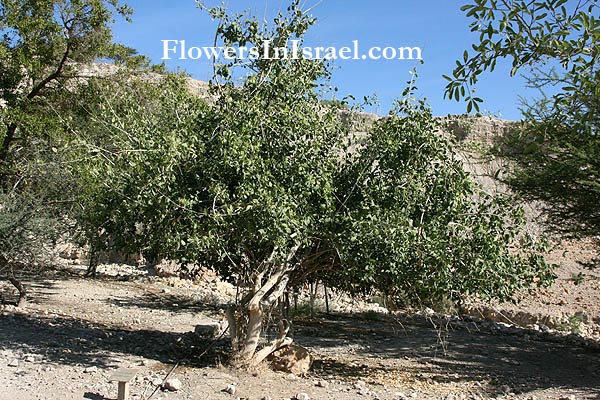
An "aha" moment for me today was Wright's (NTPG) definition of Jesus' parables as apocalyptic, as against "earthly stories with heavenly meanings" or "stories making only one point" (p393). He suggests that Mark's gospel is a "meta-apocalypse" as it "tells the story of Jesus telling the story of Israel by [apocalyptic] means" (p394). For me this makes great sense and is a helpful way of steering between outright and uncontrolled allegory and the previously mentioned exegetical deadends. Wright doesn't at this point mention a particular parable, I'm sure there'll be plenty in the next book, but the one that springs to mind to illustrate this is Mark 4:30-32 (pars. Matt 13:31-2, Luke 13:18-19).And He said: "How can we illustrate the kingdom of God, or what parable can we use to describe it? It's like a mustard seed that, when sown in the soil, is smaller than all the seeds on the ground. And when sown, it comes up and grows taller than all the vegetables, and produces large branches, so that the birds of the sky can nest in its shade." (HCSB)To me there was no way anyone who had read the Hebrew Scriptures would not see in this an impossible to miss reference to Israel's story, in particular Israel's final vindication. Don't see it? Try reading Ezek 17 where the image of a tree sheltering birds is used as a parable of the hoped for restoration of Israel. Or Ezek 31 where the same image is used to describe the extent and power of world dominating pagan empires. Or even Dan 4:9-16 where the image is used to describe the reign of a world dominating pagan emperor. (cf also Psalm 104) Suffice to say, by preaching first, "the Kingdom of God is near," and then saying in a parable, "all the birds of the sky will nest in its shade," Jesus is signalling that the kingdom he is preaching is the fulfillment of the Jewish hope for Israel's restoration and that it will be a force that will grow to dominate the whole world. The seemingly small beginning of Jesus and his raggedy disciples is going to eventually rival the greatest of empires. The humble mustard tree (see pic above) is thus dangerously political and eschatological imagery with a clear meaning that should not be reduced to a single principle or a sentimental "heavenly thought." By evoking such imagery Jesus is tapping into a deep well of deferred national hope and culturally embedded theological interpretation of history.
Surely on this one, Wright is not wrong? :-)
Wednesday, August 18, 2010
Lev 24:10-23, Blasphemy, the Lex Talionis and the Imago Dei
So there I am, minding my own business, reading through Leviticus with my lady wife one evening, when suddenly I realise, with great anger, that the person responsible for paragraphing my Bible (in this instance an ESV) has started a new paragraph complete with section heading in the middle of a narrative unit. What a wally. But then again, you could understand why someone might think v17 starts a new subject on account of the fact it moves from the topic of blasphemy to lex talionis (the law of retaliation). The section starts in verse 10 with the introduction of a new character:

What occurred to me as I pondered this was whether or not this might relate to Gen 9:6, where we have another lex talionis (kind of), that "whoever sheds the blood of a human, by a human shall that person's blood be shed; for in his own image God made humankind." (NRSV) Isn't the justification for this lex talionis that murder equates in someway to blasphemy against the image of God in one's fellow human? In which case the link between blasphemy and murder has already been made. In Lev 24:10-23, that link is simply made in another direction, possibly predicated on Gen 9:6. The punishment for blasphemy is death, and murder is itself a form of blasphemy, so it is simple move to go from talking about blasphemy (of the name) to murder (of the image bearer). However the law is careful to differentiate between the life of an animal and the life of a human, because the animal does not bear the image (v18, 21; animal rights activists take note!). On the other hand it is equally careful to remove differentiation between citizen and alien in this matter, all human life is equally sacred, it is not dependent on nationality (v16, 22).
Ok, so here are some questions:
1) How come all the conservative Christians that want the death penalty for murder don't campaign equally vigorously for the death penalty for blasphemy?
2) Those of you who don't support the death penalty for murder, what does that say about your valuing of the human life that was taken?
3) Matt 5:38-42 anyone?
pic from here
That is him in the middle, the offspring of a Danite woman and an Egyptian man. It seems like he was visiting his mum (maybe he had had a row with dad?) and then, perhaps because someone made an unkind remark about his parentage, and then got into a fight and whilst he was fighting blasphemed (v11). So the Israelites, who until that point had been enjoying watching a good fight, put him in custody until Moses could tell them what God wanted them to do (v12). So far so good, the Lord then speaks to Moses explaining the method for dealing with blasphemers and also pointing out that the same rule applied to both aliens and citizens, one rule for all (v13-17). But then God seems to go off on a tangent,'If anyone takes the life of a human being, he must be put to death. Anyone who takes the life of someone's animal must make restitution—life for life. If anyone injures his neighbour, whatever he has done must be done to him: fracture for fracture, eye for eye, tooth for tooth. As he has injured the other, so he is to be injured. Whoever kills an animal must make restitution, but whoever kills a man must be put to death. You are to have the same law for the alien and the native-born. I am the LORD your God.' Lev 24:17-22Which you might think started a new subject, except for the fact it cannot, because the story that started with the introduction of the half-Israelite half-Eygyptian blasphemer is yet to finish, and does in fact finish in the next verse, where his story ends with his violent death (v23). So what is the connection between blasphemy and the lex talionis, so that the author would place the two together like that? (if indeed they needed to "placed" together in the first place)
What occurred to me as I pondered this was whether or not this might relate to Gen 9:6, where we have another lex talionis (kind of), that "whoever sheds the blood of a human, by a human shall that person's blood be shed; for in his own image God made humankind." (NRSV) Isn't the justification for this lex talionis that murder equates in someway to blasphemy against the image of God in one's fellow human? In which case the link between blasphemy and murder has already been made. In Lev 24:10-23, that link is simply made in another direction, possibly predicated on Gen 9:6. The punishment for blasphemy is death, and murder is itself a form of blasphemy, so it is simple move to go from talking about blasphemy (of the name) to murder (of the image bearer). However the law is careful to differentiate between the life of an animal and the life of a human, because the animal does not bear the image (v18, 21; animal rights activists take note!). On the other hand it is equally careful to remove differentiation between citizen and alien in this matter, all human life is equally sacred, it is not dependent on nationality (v16, 22).
Ok, so here are some questions:
1) How come all the conservative Christians that want the death penalty for murder don't campaign equally vigorously for the death penalty for blasphemy?
2) Those of you who don't support the death penalty for murder, what does that say about your valuing of the human life that was taken?
3) Matt 5:38-42 anyone?
Friday, March 26, 2010
Virtue Can Cause Atheism Too
With all the recent excitement about a book to argue the thesis that sin can be a cause of atheism us believers need to not get too excited. It is worth remembering that, while some manifestly have turned away from faith because of moral failure, others have turned away from faith because they were too moral to accept what they felt their faith demanded of them, whether in terms of action, attitude, or belief.
Not only that but moral failure is often a catalyst for people to find faith as they come face to face with their own moral bankruptcy and seek redemption. However, a church that is full of judgmentalism will succeed in creating atheists both through moral failure and moral virtue and will also prevent those seeking redemption from finding it there. That is why the Lord told us to take the plank (judgmentalism) out of our own eye before we dare to address the dust in the eye of another.
Not only that but moral failure is often a catalyst for people to find faith as they come face to face with their own moral bankruptcy and seek redemption. However, a church that is full of judgmentalism will succeed in creating atheists both through moral failure and moral virtue and will also prevent those seeking redemption from finding it there. That is why the Lord told us to take the plank (judgmentalism) out of our own eye before we dare to address the dust in the eye of another.
Sunday, February 14, 2010
3 Reasons why I will never be a Rev.
This post is not offered to insult or question the motives of the many good Christian leaders I know (and all those I don't) who have taken the title Reverend, and I know more than a few. And this is not an issue that I would burn at the stake for. But that said I think the arguments are pretty compelling and I can't understand why everyone else doesn't think the same as me! ;-)
- Jesus' teaching in Matt 23:1-12 is quite clear that those who teach others about God shouldn't be in the business of self agrandisment and the taking (or accepting) of titles for themselves. Despite the protests and straw men of the Roman Catholic apologists this is not about the exact words, "call no man FATHER," but about the way we choose (or choose not) to be addressed as a mark of honour in our communities.
- One friend of mine was told at his ordination, "you are now ontologically different," what nonsense. The Spirit of God is what transforms us not the rites of a religious institution. If having those letters in front of your name doesn't actually in itself make you any different to someone who doesn't have them, then why do you want them there?
- I would rather people saved their reverence for God so would never want to suggest that it was in anyway due to me by taking the title Reverend.
Saturday, July 4, 2009
The parable of the sower
The parable of the sower is one of the easiest parables to interpret, because unlike most of them, this one comes with an explanation:
18"Listen then to what the parable of the sower means: 19When anyone hears the message about the kingdom and does not understand it, the evil one comes and snatches away what was sown in his heart. This is the seed sown along the path. 20The one who received the seed that fell on rocky places is the man who hears the word and at once receives it with joy. 21But since he has no root, he lasts only a short time. When trouble or persecution comes because of the word, he quickly falls away. 22The one who received the seed that fell among the thorns is the man who hears the word, but the worries of this life and the deceitfulness of wealth choke it, making it unfruitful. 23But the one who received the seed that fell on good soil is the man who hears the word and understands it. He produces a crop, yielding a hundred, sixty or thirty times what was sown." (Matt 13:18-23, NIV)
Even so I have recently heard it misused a number of times recently. Simply this is a parable challenging the listening crowds as to their reaction to the gospel (message of the kingdom). It articulates three reasons why people do not ultimately respond to that message as they should:
4. understanding
According to this parable the kingdom of God begins in our lives with understanding. Understanding comes at the beginning and the end of the parable. The 'yield', that is the good deeds and the transformation and the worship, are the result of understanding, rootedness, and carelessness, but priority is given to understanding.
Rootedness comes when we are committed to the Christian community. People seldom decide one day that they are not Christians any more, but they do easily drift away and slowly forget when they are not deeply connected to other Christians. But we can only make that commitment in as much as we understand the need for it and how to do it.
Carelessness, is an essential Christian virtue, because we only have one life, and can only serve one master, God's kingdom requires all of us, not part while the other part keeps an eye on the world's ideas of fulfillment. Again this is only possible through a right understanding of who God is and what he asks of us and promises to us.
So whatever expression of the kingdom of God you participate in, whether a traditional church, or a mega church, or a trendy urban missional community, or anything in between, your priority should be understanding. because although there are so many important and vital elements in the Christian life, they all begin with understanding.
18"Listen then to what the parable of the sower means: 19When anyone hears the message about the kingdom and does not understand it, the evil one comes and snatches away what was sown in his heart. This is the seed sown along the path. 20The one who received the seed that fell on rocky places is the man who hears the word and at once receives it with joy. 21But since he has no root, he lasts only a short time. When trouble or persecution comes because of the word, he quickly falls away. 22The one who received the seed that fell among the thorns is the man who hears the word, but the worries of this life and the deceitfulness of wealth choke it, making it unfruitful. 23But the one who received the seed that fell on good soil is the man who hears the word and understands it. He produces a crop, yielding a hundred, sixty or thirty times what was sown." (Matt 13:18-23, NIV)
Even so I have recently heard it misused a number of times recently. Simply this is a parable challenging the listening crowds as to their reaction to the gospel (message of the kingdom). It articulates three reasons why people do not ultimately respond to that message as they should:
- misunderstanding
- shallow roots
- worry/ materialism
4. understanding
According to this parable the kingdom of God begins in our lives with understanding. Understanding comes at the beginning and the end of the parable. The 'yield', that is the good deeds and the transformation and the worship, are the result of understanding, rootedness, and carelessness, but priority is given to understanding.
Rootedness comes when we are committed to the Christian community. People seldom decide one day that they are not Christians any more, but they do easily drift away and slowly forget when they are not deeply connected to other Christians. But we can only make that commitment in as much as we understand the need for it and how to do it.
Carelessness, is an essential Christian virtue, because we only have one life, and can only serve one master, God's kingdom requires all of us, not part while the other part keeps an eye on the world's ideas of fulfillment. Again this is only possible through a right understanding of who God is and what he asks of us and promises to us.
So whatever expression of the kingdom of God you participate in, whether a traditional church, or a mega church, or a trendy urban missional community, or anything in between, your priority should be understanding. because although there are so many important and vital elements in the Christian life, they all begin with understanding.
Friday, February 13, 2009
Why You Should Fast
Of the three works of piety Jesus seemed to expect his followers to perform (Matt 6:1-18) fasting is by far the least talked about and most neglected. You should fast because:
Practical reasons:
Spiritual reasons:
Practical reasons:
- It detoxes your system
- It saves money on groceries
- It trains your system to burn fat for energy (unless you overdo it!)
- You enjoy and appreciate food much more after the fast
Spiritual reasons:
- It reminds you to pray throughout the day and creates the time and space to do so by eliminating meals
- It is a symbolic self emptying to demonstrate a desire to receive God's Spirit
- Apart from its Biblical association with social justice (Isaiah 68) it also creates empathy with those who are hungry
- It creates a respite from consumption and is hence dramatically countercultural (unless you are a supermodel)
- It trains the body to submit its base desires to a higher purpose
- It demonstrates the body's fragility and weakness and helps create a sense of dependency on God
- Unlike prayer and almsgiving which are by necessity brief, fasting is continuous and lasts all day
- Unlike prayer and almsgiving which are things we do, fasting is a non-act, it is not something we do but something we dont do, so there is no possibility of thinking we are somehow influencing the world with our power
- It will have a radical effect on your walk with God. Don't believe me? Try it
Anymore ideas?
PS. fasting should not be practised by anyone with good medical reason not to do so, e.g. pregnant or nursing women and children. A good fast is from evening after dinner through the next day till morning of the second day, but you could do evening meal to evening meal, breakfast to breakfast, or just miss one meal. And no, giving up chocolate or television, while worthy in themselves, do not count!
Sunday, February 1, 2009
Matt 6:9b-10: The Lord's Prayer Revisited
πάτερ ἡμῶν ὁ ἐν τοῖς οὐρανοῖςWhich we uually translate something like:
ἁγιασθήτω τὸ ὄνομά σου
ἐλθέτω ἡ βασιλεία σου
γενηθήτω τὸ θέλημά σου
ὡς ἐν οὐρανῷ καὶ ἐπὶ γῆς
Our Father, who is in Heaven, hallowed be thy name
Your kingdom come, your will be done, on earth as it is in Heaven.
But we tend to read 'hallowed' as being a stament of fact, i.e. 'your name is holy.' But this takes us away from the original Greek where the archaic 'hallowed' is perhaps better rendered 'sanctified.' Our English translation also misses two other things present in the Greek. 1) The repetition of the word σου (your/of yours) at the end of three phrases which links together name, kingdom and will. and 2) the use of the imperative form of each verb. Perhaps my translation here (which is poor English) demonstrates those features.
Father of ours, who in Heaven is,
Sanctified must be the name of yours
Coming must be the kingdom of yours
Happening must be the will of yours
As in Heaven, so on Earth.
Reading it like this the prayer takes on a different shape. 1) Reality is reflected, in that God's name is often not (as it should be) holy but often treated as a swear word and used casually. 2) The inevitability of God's name being sanctified, the Kingdom's arrival, and the accomplishment of God's will, shows our prayer not to be a request for God to do something but an alignment of ourselves through prayer to the future certain promise of Heaven coming to Earth. If God's name will one day be treated with total holiness then we antipate that day by doing so now. If God's kingdom and will will one day be supremely manifested on Earth then we anticpate that day by living according to them now.
[Disclaimer: I am still a novice when it comes to Bible translation and so take my translation as being a provisional attempt of a learner rather than the work of an expert, please!]
Monday, January 5, 2009
Who are the Nations in Matthew 25:32?
Thanks to Sarah, David and Jane, and Fiona, for contributing to the discussion here on how we should read Mathew 25. This is something of a response to Sarah's argument, not because I think Sarah must agree with me, or that I even have a hard and fast opinion on the subject, but because there are some problems with her argument which need fixing if it is to be convincing.
Firstly, I like Sarah's summary of the message of the first two parables in Matt 25, of the Ten Virgins: "the kingdom of Heaven is an imminent event that is coming but will take a bit longer than expected!" and of the parable of the Talents: "we need to do the best with what we have and keep on working untill the master returns." I don't know that anyone would disagree with that. But it is fair to say that the climactic and sudden event that the parables describe is usually thought of by Christians as describing the end of history when Christ returns to judge the living and the dead and to renew the creation. So why does Sarah instead read them as relating to the destruction of Jerusalem in AD 70 and the end of the Jewish system of temple sacrifice? The substantial part of Sarah's argument relies on identifying the "nations" (ethnos) in Mathew 25:32 as the Jewish diaspora. This is distinctly unlikely for the following reasons:
Let me know what you think :)
* In the NIV Matt 4:15, 10:5, 10:18, 20:19, 20:25, rendered "Gentiles"; Matt 6:32, rendered "pagans"; Matt 12:18, 12:21, 24:7, 24:9, 24:14, 25:32, 28:19 rendered "nation/s" (not the Jewish nation); Matt 21:43 rendered "a people" (not the Jews);
- Just because a word is used one way by one author in Acts that does not control its meaning when used by a different author in Matthew.
- But, in this instance Acts 2:5 is referring to Jews who have come FROM every nation. The word "nation" does not describe the Jews but merely where they have been living. So for there to be consistency (although there does not have to be) between the passages, ethnos would not refer to the Jews at all but the nations in which the diaspora was found.
- Most importantly the words here rendered "nations" (ethnos) is a word used 14 times in Matthews gospel and every time it is used it refers to foreign pagan nations not the Jewish people living among those nations.* This reason alone is enough to render Sarah's argument as it stands untenable. For the writer of Matthew's gospel to have used the word consistently, as he has given every indication of doing, it simply must refer to foreign nations.
- When the word ethnos appears in the plural and with the definite article as it does in this passage my Greek NT dictionary tells me it can be translated: "non-Jews, gentiles, pagans, heathen, unbelievers." I cannot find any reason to understand this word to refer to a diaspora.
Let me know what you think :)
* In the NIV Matt 4:15, 10:5, 10:18, 20:19, 20:25, rendered "Gentiles"; Matt 6:32, rendered "pagans"; Matt 12:18, 12:21, 24:7, 24:9, 24:14, 25:32, 28:19 rendered "nation/s" (not the Jewish nation); Matt 21:43 rendered "a people" (not the Jews);
Thursday, December 18, 2008
Sarah B. on Matt 25
[It is my pleasure to introduce the first of our guest posters. Sarah is a Kiwi, raised in the Philipines, who lives most of the time in East Germany. She is mum to two girls and she and her husband are currently involved with YWAM. I have invited a few different people to contribute and Sarah is the first to respond with something. She would appreciate your feedback, she is writing here to help here refine her thoughts and understanding. Do you agree with what she has written? Do you disagree? Most importantly, why? What arguments to you find convincing/problematic? What evidence has been missed or interpreted in a way you are unsure of? Let us know what you think - Jonathan :)]
Matt 25 is a really hard one to interpret because it really needs to be read and understood in the context of Matt 24. It does not really stand alone as it is a continuation of Jesus speaking about events that will soon take place and giving more pictures to explain this. It starts by likening the Kingdom of heaven to five wise virgins who took extra oil with them, waited and did not share with others because they might need it themselves and were then invited into the wedding feast. So... the kingdom of Heaven is an imminent event that is coming but will take a bit longer than everyone anticipates! (If Jesus were communicating a more than 2000 year wait instead of just 30 years then I think he would have used a different illustration but it is not clear what time frame from these verses.)
The next part of the chapter compares the kingdom of heaven to wise servants who use their talents and multiply them so that those that have will receive more and those that don’t have will be tossed out. So we need to do the best with what we have and keep on working until the master returns.
Then Jesus talks about the nations (ethnos) being gathered and judging them, separating the sheep from the goats. First of all, I believe Jesus is talking about the same "nations" (ethnos) as he just mentioned in Matt 24. Mat 24:14 and this gospel of the kingdom will be proclaimed throughout the whole world as a testimony to all nations (ethnos), and then the end will come. And it must be the same "nations" that is mentioned in Acts 2:5. "Now there were dwelling in Jerusalem Jews, devout men from every nation (ethnos) under heaven." If there were people from every nation under heaven in Jerusalem does that mean there were Maoris’ there? Germans? A lot of people groups and nations didn’t even exist then as we know them today. So "Nations" either meant the Roman Empire or perhaps more precise, all the Jews that were living in all the nations that were known in that time. The meaning has to stay the same for all of these passages to remain consistent so with that in mind it follows that the gospel has to be preached in all nations in the Roman Empire before the end will come. In the end and when the kingdom of heaven begins all (Jews in the) nations in the Roman Empire will be gathered and judged. Then finally in Acts it is recorded that people from all the nations were gathered in Jerusalem and heard the gospel. Also in Col 1:5, "because of the hope laid up for you in heaven. Of this you have heard before in the word of the truth, the gospel, which has come to you, as indeed in the whole world it is bearing fruit and growing" and even in Romans 16:26- 27, “but has now been disclosed and through the prophetic writings has been made known to all nations, according to the command of the eternal God, to bring about the obedience of faith-- ) So if all the nations did hear the gospel and the end (the beginning of the kingdom of Heaven) was imminent and actually did come in AD70 during the colossal destruction of Jerusalem when it is estimated that almost 1 million Jews were killed and the Jewish nation ended. Then I believe they must have also been judged and the sheep separated from the goats. What was this end that is talked about? I believe that the end that is talked about is in fact the end of the Jewish (Mosaic) covenant and system of temple worship and “righteousness”. A process that Jesus began with his birth and then death on the cross and it was completed when the Jewish race was "judged" and destroyed by the roman armies in AD70.
So the separating of the sheep and the goats refers to the judgement of the Jews that died from the beginning of the Jewish covenant untill that point. Those who were the true sheep went into eternal life and the goats were sent away to eternal punishment. Notice that Jesus talks specifically about what they did and didn’t do in relation to Jesus and his family (the least of these...) on earth... "I was hungry and you gave me nothing to drink". It was a judgement specifically for the Jewish nation in their time and context. Jesus spoke of this coming judgement in the parable of the vineyard owner in Matt 21:33. This judgement concluded the Jewish (Mosaic) age (time or covenant) and the Kingdom of heaven was established and began to grow here on earth as it is in Heaven.
We are now Abraham's offspring by faith in Jesus and no longer by blood and circumcision and his everlasting covenant applies to all of us. Rom 4:13 "for the promise to Abraham and his offspring that he would be heir of the world did not come through the law but through the righteousness of faith." Rom 4:14 "for if it is the adherents of the law who are to be the heirs, faith is null and the promise is void." Gal 3:28 "There is neither Jew nor Greek, there is neither slave nor free, there is no male and female, for you are all one in Christ Jesus." Gal 3:29 "And if you are Christ's, then you are Abraham's offspring, heirs according to promise." How does this change the way we live today? We have focussed on a very small part of Jesus’s teaching about the end times that was not even intended for us but was for the Jews pre AD70. Because of this we have missed the major message that Jesus spoke to us about! The Kingdom of Heaven! What is it and how do we live it and bring it here on earth as it is in heaven. That is what we are here for, what Jesus died to set us free to do and is all we need to focus on! Bringing God’s kingdom on earth is our job with his and the Holy Spirit’s help and the more we do it the more we will see it come. It is up to us and we need to start living it and doing it!
Matt 25 is a really hard one to interpret because it really needs to be read and understood in the context of Matt 24. It does not really stand alone as it is a continuation of Jesus speaking about events that will soon take place and giving more pictures to explain this. It starts by likening the Kingdom of heaven to five wise virgins who took extra oil with them, waited and did not share with others because they might need it themselves and were then invited into the wedding feast. So... the kingdom of Heaven is an imminent event that is coming but will take a bit longer than everyone anticipates! (If Jesus were communicating a more than 2000 year wait instead of just 30 years then I think he would have used a different illustration but it is not clear what time frame from these verses.)
The next part of the chapter compares the kingdom of heaven to wise servants who use their talents and multiply them so that those that have will receive more and those that don’t have will be tossed out. So we need to do the best with what we have and keep on working until the master returns.
Then Jesus talks about the nations (ethnos) being gathered and judging them, separating the sheep from the goats. First of all, I believe Jesus is talking about the same "nations" (ethnos) as he just mentioned in Matt 24. Mat 24:14 and this gospel of the kingdom will be proclaimed throughout the whole world as a testimony to all nations (ethnos), and then the end will come. And it must be the same "nations" that is mentioned in Acts 2:5. "Now there were dwelling in Jerusalem Jews, devout men from every nation (ethnos) under heaven." If there were people from every nation under heaven in Jerusalem does that mean there were Maoris’ there? Germans? A lot of people groups and nations didn’t even exist then as we know them today. So "Nations" either meant the Roman Empire or perhaps more precise, all the Jews that were living in all the nations that were known in that time. The meaning has to stay the same for all of these passages to remain consistent so with that in mind it follows that the gospel has to be preached in all nations in the Roman Empire before the end will come. In the end and when the kingdom of heaven begins all (Jews in the) nations in the Roman Empire will be gathered and judged. Then finally in Acts it is recorded that people from all the nations were gathered in Jerusalem and heard the gospel. Also in Col 1:5, "because of the hope laid up for you in heaven. Of this you have heard before in the word of the truth, the gospel, which has come to you, as indeed in the whole world it is bearing fruit and growing" and even in Romans 16:26- 27, “but has now been disclosed and through the prophetic writings has been made known to all nations, according to the command of the eternal God, to bring about the obedience of faith-- ) So if all the nations did hear the gospel and the end (the beginning of the kingdom of Heaven) was imminent and actually did come in AD70 during the colossal destruction of Jerusalem when it is estimated that almost 1 million Jews were killed and the Jewish nation ended. Then I believe they must have also been judged and the sheep separated from the goats. What was this end that is talked about? I believe that the end that is talked about is in fact the end of the Jewish (Mosaic) covenant and system of temple worship and “righteousness”. A process that Jesus began with his birth and then death on the cross and it was completed when the Jewish race was "judged" and destroyed by the roman armies in AD70.
So the separating of the sheep and the goats refers to the judgement of the Jews that died from the beginning of the Jewish covenant untill that point. Those who were the true sheep went into eternal life and the goats were sent away to eternal punishment. Notice that Jesus talks specifically about what they did and didn’t do in relation to Jesus and his family (the least of these...) on earth... "I was hungry and you gave me nothing to drink". It was a judgement specifically for the Jewish nation in their time and context. Jesus spoke of this coming judgement in the parable of the vineyard owner in Matt 21:33. This judgement concluded the Jewish (Mosaic) age (time or covenant) and the Kingdom of heaven was established and began to grow here on earth as it is in Heaven.
We are now Abraham's offspring by faith in Jesus and no longer by blood and circumcision and his everlasting covenant applies to all of us. Rom 4:13 "for the promise to Abraham and his offspring that he would be heir of the world did not come through the law but through the righteousness of faith." Rom 4:14 "for if it is the adherents of the law who are to be the heirs, faith is null and the promise is void." Gal 3:28 "There is neither Jew nor Greek, there is neither slave nor free, there is no male and female, for you are all one in Christ Jesus." Gal 3:29 "And if you are Christ's, then you are Abraham's offspring, heirs according to promise." How does this change the way we live today? We have focussed on a very small part of Jesus’s teaching about the end times that was not even intended for us but was for the Jews pre AD70. Because of this we have missed the major message that Jesus spoke to us about! The Kingdom of Heaven! What is it and how do we live it and bring it here on earth as it is in heaven. That is what we are here for, what Jesus died to set us free to do and is all we need to focus on! Bringing God’s kingdom on earth is our job with his and the Holy Spirit’s help and the more we do it the more we will see it come. It is up to us and we need to start living it and doing it!
Subscribe to:
Posts (Atom)
-
James McGrath's blog really is a mighty blog. He is single handedly responsible for sending over 80 readers to this weeks carnival. If y...
-
I know it has been a lean year for my long suffering blog readers, but as a sign i still love you, and that the rivers of xenos have not yet...
-
I've been hearing rumours that blogging is making a comeback. Some of us never went away, but I admit, it's been slim picking round ...

