Matthew Montonini kindly pointed to some videos of Bible scholar Marrianne Meye Thompson gives us some handy hints on preaching. Enjoy!
Sermons that stick
LJO Thompson - A Memorable Sermon from Ogilvie Institute on Vimeo.
Sermons that are wise
LJO Thompson - Wise Preaching from Ogilvie Institute on Vimeo.
Jesus was a Jedi master
LJO Thompson - Challenges in Preaching John's Gospel from Ogilvie Institute on Vimeo.
More videos if you click on the link to Ogilvie inst,
Let me know what you think, :-)
Showing posts with label John (gospel). Show all posts
Showing posts with label John (gospel). Show all posts
Tuesday, June 19, 2012

Tuesday, June 28, 2011
Greg Laurie Harvest Auckland 25th June 2011: A Review
OK, I have a feeling that getting into this is going to cop me similar flack to what I got from daring to critique Charles Stanley many moons ago. And if it does that is OK but if you are going to flip out on me, at least do me a favour and read what I actually write!
The church I am part of took two buses to the Vector Arena on the weekend to attend Greg Laurie: Auckland Harvest. I had initially been resistant to getting involved, but at an initial interest meeting they sold it to me on the basis of their own financial commitment (the harvest guys were putting in plenty of their own cash), the commitment to follow up (they clearly put a lot of effort into turning converts into disciples), and to church unity (they laid the whole thing about churches working togther on thick). I also saw this as a good opportunity of the sort that we can't usually offer our people for evangelism, inviting people to a church event is one thing but free tickets to the Vector Arena is another.
The first item of the evening was a film trailer of Greg Laurie's life. I began to get a sinking feeling. This was one of the things I was afraid of, celebrity hype. Sure enough this trailer left us in no doubt that Greg was a really great guy, great enough that they'd already made a film about him and he wasn't even dead yet.
Then the Katinas came on, the first of four bands. They were great, their second song in particular was actually truly uplifting, they were joyful and funky. After three songs they were off.
Now I wasn't taking notes so I may get the order of things wrong, but one of the things we were told was that no particlar auckland church was going to get highlighted at this event so you can imagine my dissapointment when both Life Church and C3 Church were singled out by having their pastors on stage to pray and to get a shout out to their congregations. Maybe these churches had done more for the event, they probably had but I felt this was a let down, there were many other churches who had put a lot of work in to this event proportional to their size and I felt this contradicted what we had been assured of earlier.
Then came Phil Joel, he is a Kiwi artist and did a great rendition of the national anthem, although didn't get the words on the screen and didn't do it in Maori, but it was a a good moment anyway. After Phil we had three songs from Martin Smith of Delerious fame, who cracked me up by summoning up a mosh pit in the space that was supposed to be for all the converts to come forward to later. But he is a seasoned performer and lovely nutty charismatic. He reminded me of my younger days going to Delirious concerts in Blighty. Then we had Jeremy Camp who only arrived due to miraculous ciircumstances but didn't go into detail about what they were, only that he only just got here. Jeremy Camp has big muscles, I say that because I found it very distracting every time he lifted his arms in praise his pendulous triceps would hang off his arms and it made me wonder how much time he spent weight lifting. He has a great voice and I realised I knew most of his songs from the radio. He finished with a song about taking up the cross and counting the cost - I thought that was interesting because that was the exact opposite of the message I was expecting to get from Greg.
Greg's talk came next. He had been hyped up so much "great communicator", "really knows how to connect with kiwis" that I was expecting something super flash. Really, he was nothing of the sort, very much in the tradition of Billy Graham his message was very simple and not at all flash. In fact his jokes and anecdotes, with which he liberally peppered his talk were all deeply old and tried and true preachers jokes, like the one about the burglar and the parrot who says "Jesus is watching you." His relating to kiwis was pretty simple too, he made one joke about the different words Americans and Kiwis have for things, one joke about sheep and one reference to earthquakes. It is hardly probing deep into our national psyche, but it was enough becaue people did love it. No one seemed to mind that he used the word "irregardless" or referred to "CS Lewis the author of the Narnia Movies" or still insists on calling evangelistic events "crusades" (all things that would destroy your credibility in my eyes if I were a seeker).
He was preaching on John 3 and Nicodemus' encouter with Jesus. Point 1. Nicodemus was rich and religious, he should have been happy but he wasn't - people who are rich are not happy. 2. Nicodemas came to Jesus by night because he was afriad of what his friends might think - don't let peer pressure put you off following Jesus (this was where the sheep joke came, I'm sure you can work it out). 3. Jesus told Nicodemas he had to be born again - everyone wants to be transformed but only Jesus can give us the transformation we really want. I actually found the talk quite hard to follow, although the illustrations and things were simple all the jokes and anecdotes made it hard to keep track of the point he was making and the scripture was all but lost. then without passing go he went straight to the "roman road" "here is how you get saved" type of thing and told everyone to do it now cos they might die and then the Katinas came back and played this really nice altar call song and like 15% of the arena crowd (10,000) came forward to commit or recommit themselves to Christ.
It was quite impressive, although they couldn't actually cope with the number that went forward and the same thing happened the next night which meant that a number of people who tried to go forward wre not counselled and had that moment of commitment spoiled by being turned away by a steward. Not having a contingency for that level of resonse and not being flexible enough to at least be ready the next night for it to happen again was another dissapointment.
On balance though, it was a good night. the people who came with me were encouraged and many were moved. As an evangelism tool it did seem to move a number of people who have been sitting on the fence to step up and commit to Christ. However I don't feel the gospel was well explained or that anyone was allowed to obey the call of Jeremy Camp (and Jesus) to count the cost. It has also been valuable for me to discover some of those in our church with a heart for evangelism. In the future though I would rather put our efforts into something local and less celebrity driven.
Let me know what you think.
The church I am part of took two buses to the Vector Arena on the weekend to attend Greg Laurie: Auckland Harvest. I had initially been resistant to getting involved, but at an initial interest meeting they sold it to me on the basis of their own financial commitment (the harvest guys were putting in plenty of their own cash), the commitment to follow up (they clearly put a lot of effort into turning converts into disciples), and to church unity (they laid the whole thing about churches working togther on thick). I also saw this as a good opportunity of the sort that we can't usually offer our people for evangelism, inviting people to a church event is one thing but free tickets to the Vector Arena is another.
The first item of the evening was a film trailer of Greg Laurie's life. I began to get a sinking feeling. This was one of the things I was afraid of, celebrity hype. Sure enough this trailer left us in no doubt that Greg was a really great guy, great enough that they'd already made a film about him and he wasn't even dead yet.
Then the Katinas came on, the first of four bands. They were great, their second song in particular was actually truly uplifting, they were joyful and funky. After three songs they were off.
Now I wasn't taking notes so I may get the order of things wrong, but one of the things we were told was that no particlar auckland church was going to get highlighted at this event so you can imagine my dissapointment when both Life Church and C3 Church were singled out by having their pastors on stage to pray and to get a shout out to their congregations. Maybe these churches had done more for the event, they probably had but I felt this was a let down, there were many other churches who had put a lot of work in to this event proportional to their size and I felt this contradicted what we had been assured of earlier.
Then came Phil Joel, he is a Kiwi artist and did a great rendition of the national anthem, although didn't get the words on the screen and didn't do it in Maori, but it was a a good moment anyway. After Phil we had three songs from Martin Smith of Delerious fame, who cracked me up by summoning up a mosh pit in the space that was supposed to be for all the converts to come forward to later. But he is a seasoned performer and lovely nutty charismatic. He reminded me of my younger days going to Delirious concerts in Blighty. Then we had Jeremy Camp who only arrived due to miraculous ciircumstances but didn't go into detail about what they were, only that he only just got here. Jeremy Camp has big muscles, I say that because I found it very distracting every time he lifted his arms in praise his pendulous triceps would hang off his arms and it made me wonder how much time he spent weight lifting. He has a great voice and I realised I knew most of his songs from the radio. He finished with a song about taking up the cross and counting the cost - I thought that was interesting because that was the exact opposite of the message I was expecting to get from Greg.
Greg's talk came next. He had been hyped up so much "great communicator", "really knows how to connect with kiwis" that I was expecting something super flash. Really, he was nothing of the sort, very much in the tradition of Billy Graham his message was very simple and not at all flash. In fact his jokes and anecdotes, with which he liberally peppered his talk were all deeply old and tried and true preachers jokes, like the one about the burglar and the parrot who says "Jesus is watching you." His relating to kiwis was pretty simple too, he made one joke about the different words Americans and Kiwis have for things, one joke about sheep and one reference to earthquakes. It is hardly probing deep into our national psyche, but it was enough becaue people did love it. No one seemed to mind that he used the word "irregardless" or referred to "CS Lewis the author of the Narnia Movies" or still insists on calling evangelistic events "crusades" (all things that would destroy your credibility in my eyes if I were a seeker).
He was preaching on John 3 and Nicodemus' encouter with Jesus. Point 1. Nicodemus was rich and religious, he should have been happy but he wasn't - people who are rich are not happy. 2. Nicodemas came to Jesus by night because he was afriad of what his friends might think - don't let peer pressure put you off following Jesus (this was where the sheep joke came, I'm sure you can work it out). 3. Jesus told Nicodemas he had to be born again - everyone wants to be transformed but only Jesus can give us the transformation we really want. I actually found the talk quite hard to follow, although the illustrations and things were simple all the jokes and anecdotes made it hard to keep track of the point he was making and the scripture was all but lost. then without passing go he went straight to the "roman road" "here is how you get saved" type of thing and told everyone to do it now cos they might die and then the Katinas came back and played this really nice altar call song and like 15% of the arena crowd (10,000) came forward to commit or recommit themselves to Christ.
It was quite impressive, although they couldn't actually cope with the number that went forward and the same thing happened the next night which meant that a number of people who tried to go forward wre not counselled and had that moment of commitment spoiled by being turned away by a steward. Not having a contingency for that level of resonse and not being flexible enough to at least be ready the next night for it to happen again was another dissapointment.
On balance though, it was a good night. the people who came with me were encouraged and many were moved. As an evangelism tool it did seem to move a number of people who have been sitting on the fence to step up and commit to Christ. However I don't feel the gospel was well explained or that anyone was allowed to obey the call of Jeremy Camp (and Jesus) to count the cost. It has also been valuable for me to discover some of those in our church with a heart for evangelism. In the future though I would rather put our efforts into something local and less celebrity driven.
Let me know what you think.
Thursday, May 12, 2011
Blowing in the wind: A parable
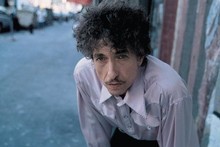
Bob Dylan recently came to NZ and put on a show, many of his oldest fans turned up to hear what they hoped would be a trip down memory lane, like listening to their old vinyl but with the added thrill of the man himself sitting there. Instead they were shocked by the terrible racket being produced and dissapointed not to recognise more than a tiny handful of songs. In disgust many fans walked out.

Others though had followed Dylan's career a bit more closely and knew that he wasn't still rehearsing karaoke versions of his 60's material, some of them were still dissapointed with the performance, but others thrilled to find themselves in the presence of musical genius.
People who expect musicians to remain solidly stuck in the past, don't buy their later records but then complain when they don't know any songs at the concert strike me as being hopeless. They are not fans of the musician at all but instead only fans of a recording, perhaps one that is tied to their youth or a different era, they weren't paying homage to Dylan, they were paying homage to their own nostalgia. Nothing wrong with that I suppose, but how churlish to complain that Dylan had moved on without them, that he had a life of his own and hadn't stayed stuck in their past.
Like the wind, he had moved on. "So it is with everyone born of the Spirit." (John 3:8)
Monday, March 21, 2011
Ancient Greek Poetry?
John Hobbins of Ancient Hebrew Poetry takes a break from Hebrew to give us a schooling in translating the NT.
Is it hard to translate the gospel of John? Not really. Its diction in the original is clean and terse. The author relies on a bundle of bright oppositions expressed through cascades of words that repeat. A faithful translator does well to mirror such in translation. Why do so many modern translations take away from the text by adding to it? Why set aside repetends and parallelisms in the source text if they can be reproduced? It boggles the mind.Interesting how the comments completely ingnore the issue of translation and get stuck into arguing about universalism and evangelicalism, go figure.
Friday, October 29, 2010

Wednesday, September 22, 2010
Christian Preaching from the Old Testament #1
[This is the first in a serialisation and slight revision of an old essay of mine, in the hope of getting some interaction from others and also making it more accessible.]
Hebrew Scripture for Christian Preaching
One of the Early Church’s most famous heretics, Marcion, decided that the God of the Old Testament and the God revealed in Christ were incompatible. In what was arguably the first attempt to create a Christian canon of scripture, he sought to dispose of the OT entirely and purge OT references from the New Testament.[1] Notwithstanding Marcion’s many other theological quirks, his objection to the OT is perhaps something we can still relate to. It is still not uncommon to hear a Christian today describe themselves as a ‘New Testament Christian’ as opposed to an ‘Old Testament Christian.’ Apart from the apparent dichotomy of legalism and grace between the testaments there are also ethical issues raised by the text: genocide, incest and misogyny, among others. These and other perceived problems translate into a general neglect of the OT as a source for preaching and, when it is used, uncertainty in the appropriate way to do so.[2] Three problems confront any Christian wanting to preach from the OT: how to relate the OT and NT, how to correctly exegete the OT, and how to discover the contemporary relevance of any particular OT passage.[3]
However, evangelicals are rightly restrained from following Marcion’s lead, primarily by the NT itself. Verses such as Luke 24:44 and John 5:40 show Jesus clearly stating that the OT is in some significant sense about him.[4] Numerous passages in Acts reveal that apostolic preaching repeatedly argued that Christ fulfilled the OT.[5] The gospels, epistles and Revelation are laced through with OT quotations and allusions to the OT scripture.[6] In addition to this, the historical record clearly shows that the primary source for the theological reflection of the early church on Jesus Christ was the OT.[7] So by using the OT as a source for preaching we are following Christ, the Apostles, the authors of the NT and the Early Church Fathers.
Part of the problem arises in the fact that Christ and his early followers drew upon a deep and established tradition of scriptural interpretation that modern scholars only have limited access to and the ordinary Christian has no understanding of.[8] Not only so, but many of the hermeneutical devices employed quite satisfactorily in the 1st century appear dishonest and unscientific in the 21st.[9] If the early church relied on Second Temple era hermeneutics to make Christian sense of the OT should present day preachers use the same methods or can modern hermeneutics also find that the OT speaks of Christ?
[1] John Bright,, The Authority of the Old Testament, (Carlisle: Paternoster, 1997), 16, 60-62; F.F. Bruce, The Canon of Scripture, (Glasgow: Chapter House, 1988), 134-144
[2] Steven Mathewson, The art of Preaching Old Testament Narrative, (Grand Rapids: Baker, 2002) 13, 23-4; Walter Kaiser, Preaching and teaching oorm the Old Testament: A Guide for the Church, (Grand Rapids: Baker, 2003), 10; Graeme Goldsworthy, Preaching The Whole Bible as Christian Scripture, (Grand Rapids: Eerdmans, 2000), VII, XII; SG 15-6; Sidney Greidanus, Preaching Christ from the Old Testament: A Contemporary Hermeneutical Method, (Grand Rapids: Eerdmans, 1999), 15-16, provides statistical data on the subject, un-named denominational statistics show <20% of Sunday sermons are on OT passages and a preaching journal reports <10% of submission are on an OT text.
[3] Martens, Elmer A., ‘Preaching from the Old Testament: A Bibliographic Essay’ Direction (April 1982 Vol11 no 2, 30-39), 1. http://www.directionjournal.org/article/?433 (accessed 16/04/08)
[4] David Peterson, Christ and His People in the Book of Isaiah, (Leicester: IVP, 2003), 12; N.T. Wright, Scripture and the Authority of God, 32
[5] Peterson, Christ and His People in the Book of Isaiah, 23; e.g. Acts 2:16-39, 8:30-35. 13:16-41, 17:2-3.
[6] Grant R. Osborne, The Hermeneutical Spiral: a comprehensive introduction to Biblical interpretation, (Downers Grove: IVP, 1991), 323, ‘There are approximately three hundred quotes and literally thousands of allusions.’
[7] See Donald Juel, Messianic Exegesis: Christological Interpretation of the Old testament in Early Christianity; Wright, Scripture and the Authority of God, 35-6
[8] See Joseph A. Fitzmyer, The One Who is to Come, (Cambridge: Eerdmans, 2007); and G.K. Beale and D.A. Carson (eds), Commentary on the New Testament use of the Old testament, (Grand Rapids: Baker, 2007), XXV
[9] See Peter Enns, Inspiration and Incarnation: Evangelicals and the problem of the Old Testament, (Grand Rapids:Baker, 2005), 158-160; Of course the operative word here is ‘appear’, but the method of NT writers in their use of the OT is still a topic of considerable debate and requiring knowledge of Second Temple Judaism far beyond most pastors, see Osborne, The Hermeneutical Spiral, 332
The relationship between Luke and John's Gospels.
Jim highlights an intriguing and pithy article on the suggestion that Luke's gospel made use of a Johanine oral tradition and used it over and against the Markan tradition. Strong stuff. I once asked a Luke scholar about the relationship and she told me forthrightly that it was a Johanine scholar's problem, not hers. I thought at the time that was a little presumptious and I think this article shows rather nicely that the boot could well need to be on the other scholar's foot after all!
Tuesday, September 21, 2010
Unity is bad for Human Health
Whilst sitting in on a lecture on Gen 11, I was struck by Tim's remarks concerning the way human unity is always bad for someone. Unity is always at the expense of someone, usually a minority. For example in Iraq, Sudan and Burma conflict is occuring primarily because some factions are trying to bring unity to a geographical area where other resident factions exist which want to maintain their diversity (or bring a different sort of unity).
In NZ there is a popular polemic against difference that suggests everyone in NZ is simply Kiwi, but of course what they mean is that those in ethnic minorities should simply confrom to the majority (pakeha/european). In conversation with a Maori Christian leader I was told that the churches are always saying to Maori that we should be one in Christ, but the Maori response is "one what?" Because the implicit message they receive is that to have unity they need to become european. And yet Christ's prayer in John 17 was for the unity of his church and in Acts 2, 13, Eph 2-4 and Rev 5, (among many others) we are confronted with a vision of a church where in difference and diversity there is unity around Christ.
And as if that wasn't enough, today we had a Kenyan missionary to NZ speaking and who told us that using other languages and singing the odd song from a different culture wasn't enough but he wanted the church to be interested in the "way" he wanted to worship as an African and that once a year they should let him lead worship. So I had this vision of him stood up front of his Kiwi church exhorting them to be temporarily more African which I just couldn't see going well.
My hunch is that true multicultural church needs to follow the model of Antioch (Acts 13) and have multicultural leadership. Are there any churches out there today that are truly managing to be multicultural? If so what do they look like and how do they do it?
In NZ there is a popular polemic against difference that suggests everyone in NZ is simply Kiwi, but of course what they mean is that those in ethnic minorities should simply confrom to the majority (pakeha/european). In conversation with a Maori Christian leader I was told that the churches are always saying to Maori that we should be one in Christ, but the Maori response is "one what?" Because the implicit message they receive is that to have unity they need to become european. And yet Christ's prayer in John 17 was for the unity of his church and in Acts 2, 13, Eph 2-4 and Rev 5, (among many others) we are confronted with a vision of a church where in difference and diversity there is unity around Christ.
And as if that wasn't enough, today we had a Kenyan missionary to NZ speaking and who told us that using other languages and singing the odd song from a different culture wasn't enough but he wanted the church to be interested in the "way" he wanted to worship as an African and that once a year they should let him lead worship. So I had this vision of him stood up front of his Kiwi church exhorting them to be temporarily more African which I just couldn't see going well.
My hunch is that true multicultural church needs to follow the model of Antioch (Acts 13) and have multicultural leadership. Are there any churches out there today that are truly managing to be multicultural? If so what do they look like and how do they do it?
Wednesday, May 19, 2010
Love is NOT all you need
Richard Hays in The Moral Vision of the New Testament, (p202) gives three reasons why "love" is inadequate as a unifying theme for NT ethics (and by implication why it is inadequate for ethics today).
1. Mark, Acts, Hebrews, and Revelation "resist any attempt to sythesze their moral visions by employing love as a focal image . . . Despite the powerful theological uses to which the motif of love is put by Paul and John, that motif cannot serve as the common denominator for New Testament Ethics." Instead Hays suggests "community, cross and new creation."
2. "What the New testament means by love is embodied in the concretely in the cross." and so to treat love apart from the cross is to result in "conceptual abstraction, away from the specific image of the cross."
3. "The term ["love"] has become debased in popular discourse; it has lost its power of discrimination, having become a cover for all manner of vapid self indulgence." "We can recover the power of love only by insisting that love's meaning is to be discovered in the New Testament's story of Jesus - therefore, in the cross."
So who do you believe, Hays or the Beatles?
1. Mark, Acts, Hebrews, and Revelation "resist any attempt to sythesze their moral visions by employing love as a focal image . . . Despite the powerful theological uses to which the motif of love is put by Paul and John, that motif cannot serve as the common denominator for New Testament Ethics." Instead Hays suggests "community, cross and new creation."
2. "What the New testament means by love is embodied in the concretely in the cross." and so to treat love apart from the cross is to result in "conceptual abstraction, away from the specific image of the cross."
3. "The term ["love"] has become debased in popular discourse; it has lost its power of discrimination, having become a cover for all manner of vapid self indulgence." "We can recover the power of love only by insisting that love's meaning is to be discovered in the New Testament's story of Jesus - therefore, in the cross."
So who do you believe, Hays or the Beatles?
Monday, April 26, 2010
McGrath, The Only True God: A Book Review
James F. McGrath, The Only True God: Early Christian Monotheism in Its Jewish Context
[With thanks to the author for a review copy]
McGrath’s book has an argument that for many would seem counterintuitive, that the early Christians did not diverge from Jewish monotheism, even despite their veneration of Jesus. For McGrath this is simply because the modern conceptions of monotheism are not how 1st Century Jews would have defined their monotheism. The book’s thesis is that while Christians, post Nicaea, are used to thinking about monotheism in terms of ontology, 1st Century Jews defined their devotion to the one God in terms of worship. While Christians did worship Christ in some respects, McGrath argues that only sacrificial worship to Christ would have made Christ equal to God in a way that would constitute a breach of 1st Century Jewish monotheism.
The book itself has the rare virtue of being blessedly short, a mere 104 pages of text (not including notes, bibliography and index). That being the case, what McGrath achieves within those pages is all the more impressive. The book is intended to be accessible to those without a detailed knowledge of the field. Thus the first chapter takes pains to explain clearly the important concepts and relevant methods. This is done in a thorough but economical style. In the second chapter McGrath turns to the question of how Jews in the Greco-Roman era would have understood their own monotheism in the context of a world where the worship of many gods was commonplace. Given the book’s intention to be accessible to the non-expert it is a shame that some of the more obscure source passages referenced, e.g. Hecataeus of Abdera, do not appear in translation, instead the reader is reliant on McGrath’s précis of the relevant points. Having established a working definition of 1st Century Jewish monotheism McGrath moves on to examine the writings of Paul (chp 3), the Gospel of John (chp 4), and Revelation (chp 5), against this definition. In each chapter McGrath continues to develop his thesis and in each case finds the Christian elevation of Christ to be within the bounds of his definition of 1st Century Jewish monotheism.
The sixth chapter moves on from the Biblical material to discuss the “two powers heresy” within rabbinic literature. McGrath argues that after the destruction of the Jerusalem Temple Jewish monotheism was forced to redefine itself. One result of this process was the rabbinic response to the two powers heresy which while probably originally targeted at the Gnostics came to encompass the Christians also. McGrath concludes that certain ideas that were condemned in the late 2nd and early 3rd centuries need not have been controversial in the 1st century. Thus the schism between Christianity and Judaism over their respective understandings of monotheism is re-dated from the 1st to the 3rd century and, surprisingly, is a result of a change in the boundaries of Jewish monotheism rather than a developing Trinitarianism. The final chapter briefly summarises the book’s findings and then offers some thoughts on their historical and theological implications.
McGrath’s book is excellently written, the only hindrance to the reader’s enjoyment being the use of endnotes instead of footnotes. It consistently progresses through his argument with nuance but without wasting space on peripheral issues. It engages with other scholarship in a respectful but efficient manner and represents a significant contribution to the field. McGrath’s concluding thoughts are balanced and show a concern for further discussion and for the appropriation of the work by theologians. I would suggest it is essential reading for anyone interested in NT background, Christology, or the historical development of Trinitarian theology.
[With thanks to the author for a review copy]
McGrath’s book has an argument that for many would seem counterintuitive, that the early Christians did not diverge from Jewish monotheism, even despite their veneration of Jesus. For McGrath this is simply because the modern conceptions of monotheism are not how 1st Century Jews would have defined their monotheism. The book’s thesis is that while Christians, post Nicaea, are used to thinking about monotheism in terms of ontology, 1st Century Jews defined their devotion to the one God in terms of worship. While Christians did worship Christ in some respects, McGrath argues that only sacrificial worship to Christ would have made Christ equal to God in a way that would constitute a breach of 1st Century Jewish monotheism.
The book itself has the rare virtue of being blessedly short, a mere 104 pages of text (not including notes, bibliography and index). That being the case, what McGrath achieves within those pages is all the more impressive. The book is intended to be accessible to those without a detailed knowledge of the field. Thus the first chapter takes pains to explain clearly the important concepts and relevant methods. This is done in a thorough but economical style. In the second chapter McGrath turns to the question of how Jews in the Greco-Roman era would have understood their own monotheism in the context of a world where the worship of many gods was commonplace. Given the book’s intention to be accessible to the non-expert it is a shame that some of the more obscure source passages referenced, e.g. Hecataeus of Abdera, do not appear in translation, instead the reader is reliant on McGrath’s précis of the relevant points. Having established a working definition of 1st Century Jewish monotheism McGrath moves on to examine the writings of Paul (chp 3), the Gospel of John (chp 4), and Revelation (chp 5), against this definition. In each chapter McGrath continues to develop his thesis and in each case finds the Christian elevation of Christ to be within the bounds of his definition of 1st Century Jewish monotheism.
The sixth chapter moves on from the Biblical material to discuss the “two powers heresy” within rabbinic literature. McGrath argues that after the destruction of the Jerusalem Temple Jewish monotheism was forced to redefine itself. One result of this process was the rabbinic response to the two powers heresy which while probably originally targeted at the Gnostics came to encompass the Christians also. McGrath concludes that certain ideas that were condemned in the late 2nd and early 3rd centuries need not have been controversial in the 1st century. Thus the schism between Christianity and Judaism over their respective understandings of monotheism is re-dated from the 1st to the 3rd century and, surprisingly, is a result of a change in the boundaries of Jewish monotheism rather than a developing Trinitarianism. The final chapter briefly summarises the book’s findings and then offers some thoughts on their historical and theological implications.
McGrath’s book is excellently written, the only hindrance to the reader’s enjoyment being the use of endnotes instead of footnotes. It consistently progresses through his argument with nuance but without wasting space on peripheral issues. It engages with other scholarship in a respectful but efficient manner and represents a significant contribution to the field. McGrath’s concluding thoughts are balanced and show a concern for further discussion and for the appropriation of the work by theologians. I would suggest it is essential reading for anyone interested in NT background, Christology, or the historical development of Trinitarian theology.
Subscribe to:
Posts (Atom)
-
James McGrath's blog really is a mighty blog. He is single handedly responsible for sending over 80 readers to this weeks carnival. If y...
-
I know it has been a lean year for my long suffering blog readers, but as a sign i still love you, and that the rivers of xenos have not yet...
-
I've been hearing rumours that blogging is making a comeback. Some of us never went away, but I admit, it's been slim picking round ...

